The most expensive mistake we see in District 2 is a habit buyers bring over from the softer districts: treating everything as endlessly changeable. In toys or hair accessories you can often ask for a new colour or a tweaked design and the factory will shrug and agree. In District 2 the products are built around steel, moulds and tooling, and changes cost real money or are simply not on offer at your quantity. A good Yiwu wholesale market agent will tell you this before you fall in love with a suitcase that only exists in black, and it is the single idea that makes the rest of this district make sense.
One note before the detail, because it confuses people with a booth address in hand. This district is written as Yiwu Market District 2, as Futian Market District 2 and as Yiwu International Trade City District 2, depending on whose signage, invoice or business card you are reading. They are all the same building.
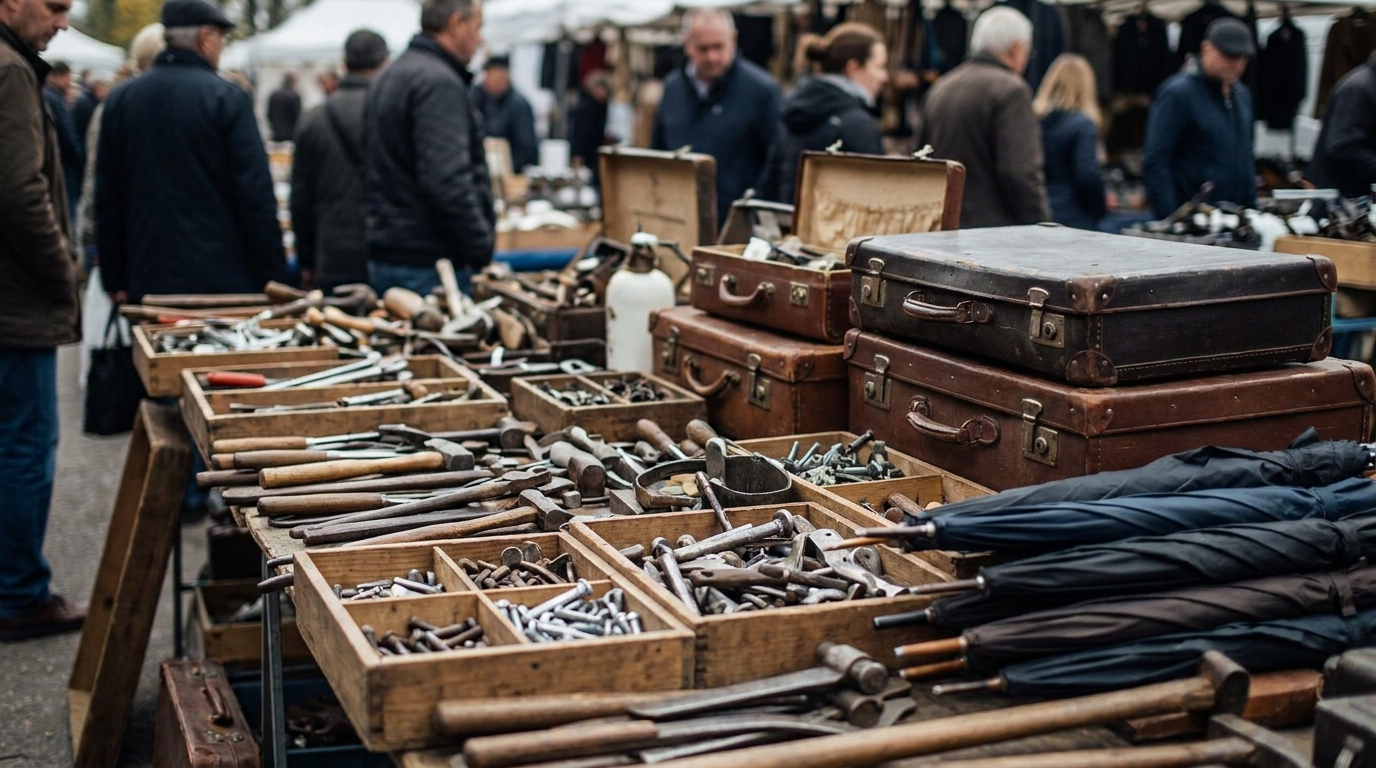
District 2 is where the market gets heavy. Hardware and hand tools, locks and fittings, electrical accessories, kitchen tools, then whole floors of luggage, bags and backpacks, and finally the umbrella and rain gear zone that Yiwu is quietly famous for. The categories look unrelated until you notice what they share: metal, moulded parts, and weight that changes your shipping maths.
Hardware and tools: the spec is the product
A pair of pliers is not a design object, it is a list of specifications. Steel grade, hardness treatment, handle material, finish, and the tolerance to which it is all held. Two booths can show you visually identical screwdriver sets at prices far apart, and the difference is inside the metal where your eyes cannot go. This is the district where buying on looks fails hardest.
So handle the goods. Flex the pliers, work the ratchet, feel where the weight sits. Then ask for the specification in writing: the steel type, the coating, the packing. Sellers of serious tools are used to these questions and answer them without drama. A booth that cannot tell you what steel its own product uses is telling you something useful too.
One more habit worth forming with hardware: weigh things. A cheaper hammer is often simply a lighter hammer, and a carton of them is a lighter carton. Weight per unit is the honest number in this category, and it is also the number your freight quote is built on, so write it into the order.
Luggage, bags and backpacks
The luggage floors feel closer to a fashion district, but the buying logic is still District 2 logic. The shell of a suitcase comes out of a mould, the trolley system and wheels are bought-in components, and what a booth can vary for you at ordinary quantities is mostly the fabric, the lining, the colour and the logo. If you want a different shell shape, you are asking for tooling, and tooling conversations start at quantities most Yiwu buyers are not carrying.
What buyers get wrong here is testing the wrong thing. Everyone spins the wheels in the showroom. Fewer people load the bag. A backpack seam that holds an empty display bag will meet its real judge when a student fills it with books, so put weight in it, lift it by one strap, lean on the handle of the trolley case. The booths expect this. The samples exist to be abused a little.
Zips, wheels and handles are where cost is quietly removed from a bag. If your market expects a named zip brand or a double stitched stress point, name it in the order sheet. Reorders are also less stable than people assume, because fabrics are bought in dye lots. Keep a swatch from every delivery. When the next batch arrives slightly different, the swatch settles the conversation in a minute.
Umbrellas and rain gear
Umbrellas look like the simplest product in the district and they are one of the easiest to get wrong. The frame count, the rib material, the shaft, the canopy fabric and its coating all move independently, and every one of them has a cheaper version that looks identical folded on a shelf. An umbrella is a mechanism, so open and close every sample twenty times, not twice. The weak ones announce themselves quickly.
Printing is the other trap. Promotional umbrella orders live and die on the print, and a colour that looks right on a screen can land differently on a coated canopy fabric. Approve a printed sample, not a digital proof, before bulk production runs. It adds days to the schedule and saves the whole order.
Rain gear follows the same pattern in fabric form. Ponchos and raincoats are priced by the thickness of the material, and the difference between grades is a number the seller can quote you. Ask for it, and compare grades with water rather than with your thumb.
Money, minimums and the weight problem
Prices in District 2 sit closer to raw material costs than in the fancy goods districts, and metal prices move. A hardware quote is perishable in a way a hair clip quote is not, so confirm prices at the moment of ordering rather than relying on figures gathered on a scouting trip months earlier. Sellers are not being slippery when the number shifts, the steel market shifted underneath them.
Minimums are generally firm and rise with the amount of tooling behind a product. For moulded and branded goods, expect the minimum to be the minimum. Where you do have room is in composition: a luggage seller would usually rather give you three sizes of one shell design than one size, and tool sellers will often mix set configurations within a run. How minimum quantities work across the market in general is its own subject, which we treat separately, so here we will only say that in this district you negotiate composition more than you negotiate quantity.
Then there is weight, the tax this district charges that the others mostly do not. A carton of umbrellas or door hinges hits freight limits long before it fills a box, and sea freight quotes that looked comfortable on paper tighten quickly. When we consolidate mixed containers in our warehouse we tend to plan District 2 goods as the bottom layers and the dense corners of the load, with lighter districts stacked above them. If your whole order is District 2 goods, get the freight estimate before you commit, not after.
What to check before the deposit
- The written spec: materials, weights, component brands where relevant, and the exact packing.
- A worked sample. Opened, closed, loaded, dropped once. Showroom condition proves very little.
- Electrical items against your market’s plug and voltage. This is a compliance area that varies by country, so confirm the requirements at home rather than at the booth.
- Carton weight and dimensions, so the freight surprise happens on paper instead of at the loading dock.
- The print approval step, in writing, for anything branded.
Our honest view of District 2 is that it is the best district in the market for buyers who prepare and the worst for buyers who improvise. The goods do not forgive guesswork, but they reward a written spec like nothing else in Futian. Come with your numbers, or come with someone who carries them for you, and the hardware floors will treat you well.
A Yiwu District 2 sourcing agent earns the fee in this district mainly by checking the steel, the plating and the moving parts before a carton is sealed.