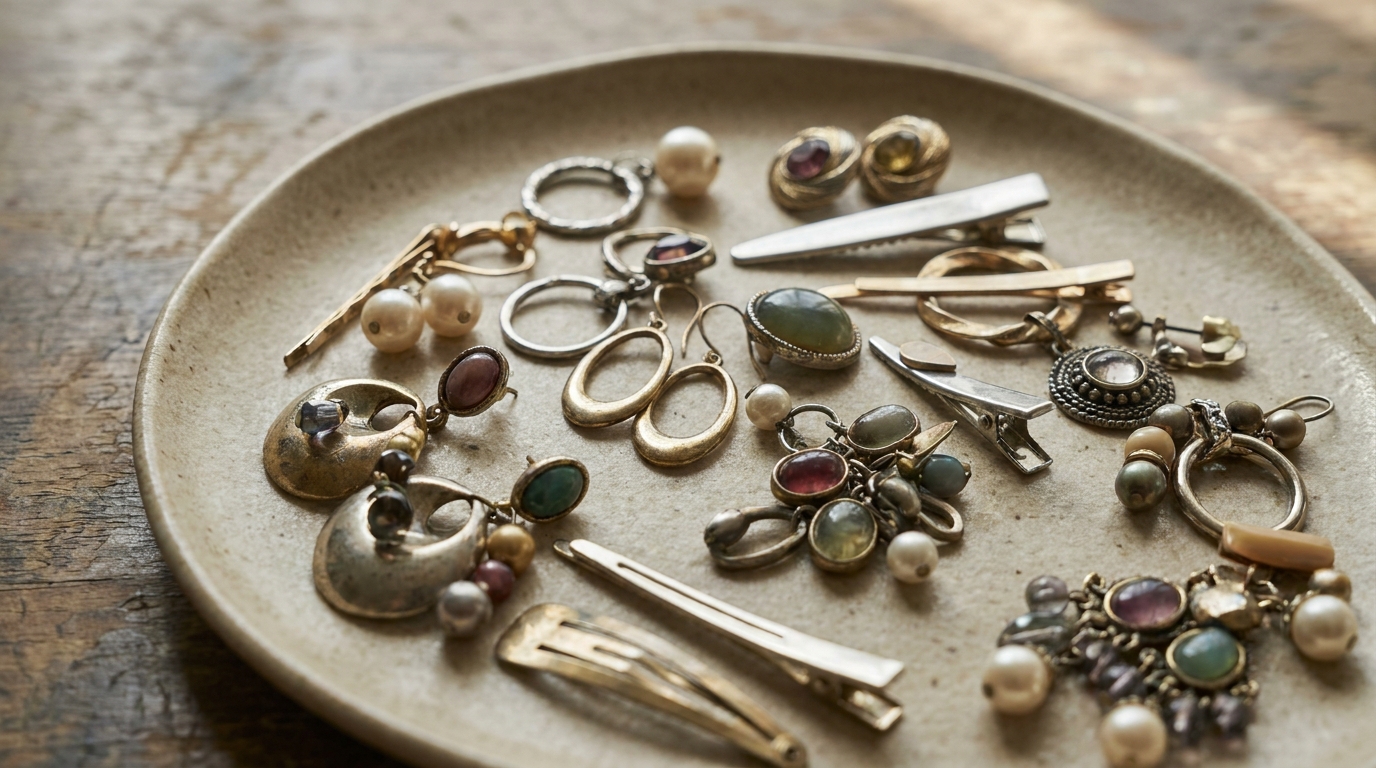
Ask anyone in Yiwu product sourcing which category generates the most questions per dollar of order value and jewellery is a strong contender. The pieces are small, the margins can be excellent, and a single carton holds thousands of units. But almost every problem we see with jewellery and fashion accessories traces back to one thing: the buyer thought about the design and not about the material. So this guide is organised by material, because that is genuinely how you should think about the category. The look gets the customer to pick the piece up. The material decides whether they come back.
Alloy and plated pieces: the heart of the market
The bulk of fashion jewellery in Yiwu is cast from zinc alloy and then plated in gold, silver, rose gold, gunmetal or whatever this season demands. Two questions matter far more than the colour.
The first is plating thickness. Plating is measured in microns, and the difference between a piece that still looks good after a month on a wrist and a piece that shows base metal after a week is largely a difference of microns and process. Booths rarely volunteer this number. Ask for it, and ask whether there is a protective lacquer or e-coating over the plating. You will not be able to verify the answer by eye, which is exactly why it belongs in your written order specification, so there is something to check against later.
The second is the nickel question. Nickel in alloys and platings is a known cause of skin reactions, and many destination markets restrict nickel release from articles worn against the skin. We will not tell you what your market’s rules say or whether any given piece meets them; that is for a test laboratory and a qualified adviser in your country. What we will tell you is that “nickel free” said out loud at a booth is a sales phrase, not a test report. If your market cares about nickel, and most Western markets do, plan for testing before you commit to volume.
Tarnish, and why the sample always looks fine
Tarnish deserves its own section because it is the classic delayed complaint. The sample you approve in October looks perfect, because it is fresh. The shipment that arrives in January looks perfect too. The one-star reviews arrive in April, when humidity, skin contact and time have done their work on thin plating.
You cannot fully prevent this on low-cost fashion jewellery, and anyone who promises otherwise is overpromising. You can reduce it: specify plating thickness and topcoat, ask for individual sealed polybags rather than pieces rattling loose together, ask about anti-tarnish paper or desiccants in the inner packaging, and wear-test a sample yourself for a few weeks before ordering. A fortnight on your own wrist teaches you more than an hour at the booth.
Stainless steel: the step up
Steel jewellery costs more per piece than alloy and behaves better. It resists tarnish, takes plating well, and suits buyers selling at a slightly higher price point with fewer complaints. The catch is that not everything sold as steel is the grade you assume, and grades differ in corrosion resistance. Put the grade you agreed in the order sheet, and if the claim matters commercially to you, have it verified rather than taken on trust. Steel pieces are also noticeably heavier, which matters when your freight quote is by weight.
Acrylic, resin and the fashion end
Chunky resin rings, acrylic hoops, beaded phone charms. This end of the market moves on trends measured in months, so speed matters more than perfection. Check that colours are consistent across a batch, that pin backs and posts are straight, and that nothing smells strongly of solvent when a sealed bag is opened. Resin pieces vary piece to piece by nature; decide how much variation you can accept and say so in writing rather than discovering your tolerance at the complaint stage.
Hair accessories and textile pieces
Scrunchies, claw clips, headbands and kids’ hair sets sit in the same booths and ship in the same cartons, so most jewellery buyers add them. Claw clips live or die on the spring and the teeth: open one fifty times at the booth and see if it loosens. On anything marketed for children, remember that small parts and attached decorations bring child-safety rules into play in most destination markets, and those requirements are for you to confirm with a qualified party in your own country. Do not let a supplier’s reassurance stand in for that.
Findings, chains and components
Some buyers come to Yiwu not for finished jewellery but for components: clasps, ear wires, chain by the metre, charms and settings for their own production or craft-kit products. The market serves this well, and the same material logic applies twice over, because a component touches skin just as a finished piece does. Ear wires in particular deserve the nickel conversation above. For components, consistency is the quality test that matters: pull ten clasps from different bags and check they are actually identical.
Card packaging: the cheapest upgrade in the category
A pair of earrings loose in a polybag is a commodity. The same pair on a printed card with your brand on it is a product. Yiwu is one of the easiest places anywhere to get display cards, pouches, gift boxes and header cards made, often from booths a few aisles away from the jewellery itself, and carding can frequently be done as part of consolidation before shipping. Two cautions. Printed cards need proofing like any print job, so approve a physical proof, not a photo of one. And any claims printed on the card, “hypoallergenic”, “sterling”, “nickel safe”, are claims you as the seller are making to your customer, so print nothing you cannot support.
Ordering notes that cut across every material
- MOQ varies by booth and material and is negotiated; jewellery MOQs are usually stated per design per colour, so a mixed order across twenty designs is normal and expected here.
- Weight adds up faster than beginners expect. A carton of alloy necklaces is dense, and freight is charged on whichever of weight or volume is greater.
- Photograph approved samples next to a ruler and a colour reference. Plating shades drift between production runs, and a photo settles arguments.
- Reorder the winners quickly. Fashion booths rotate designs, and the style that sold well for you may be gone next season. Our post on getting the same product on a second order covers why.
How we handle jewellery orders
Sourcing Agent Yiwu has staff on the ground in the market and warehouse space where mixed jewellery orders from many booths are consolidated, checked against approved samples, carded where the client wants it, and packed for export. Yiwu product sourcing in this category is mostly patience and specification, and that is exactly the boring, valuable work an agent does for you. If jewellery or accessories are on your list, write to info@sourcingagentyiwu.com or WhatsApp +86 136-6892-2294 and start with the material, not the design. You now know why.