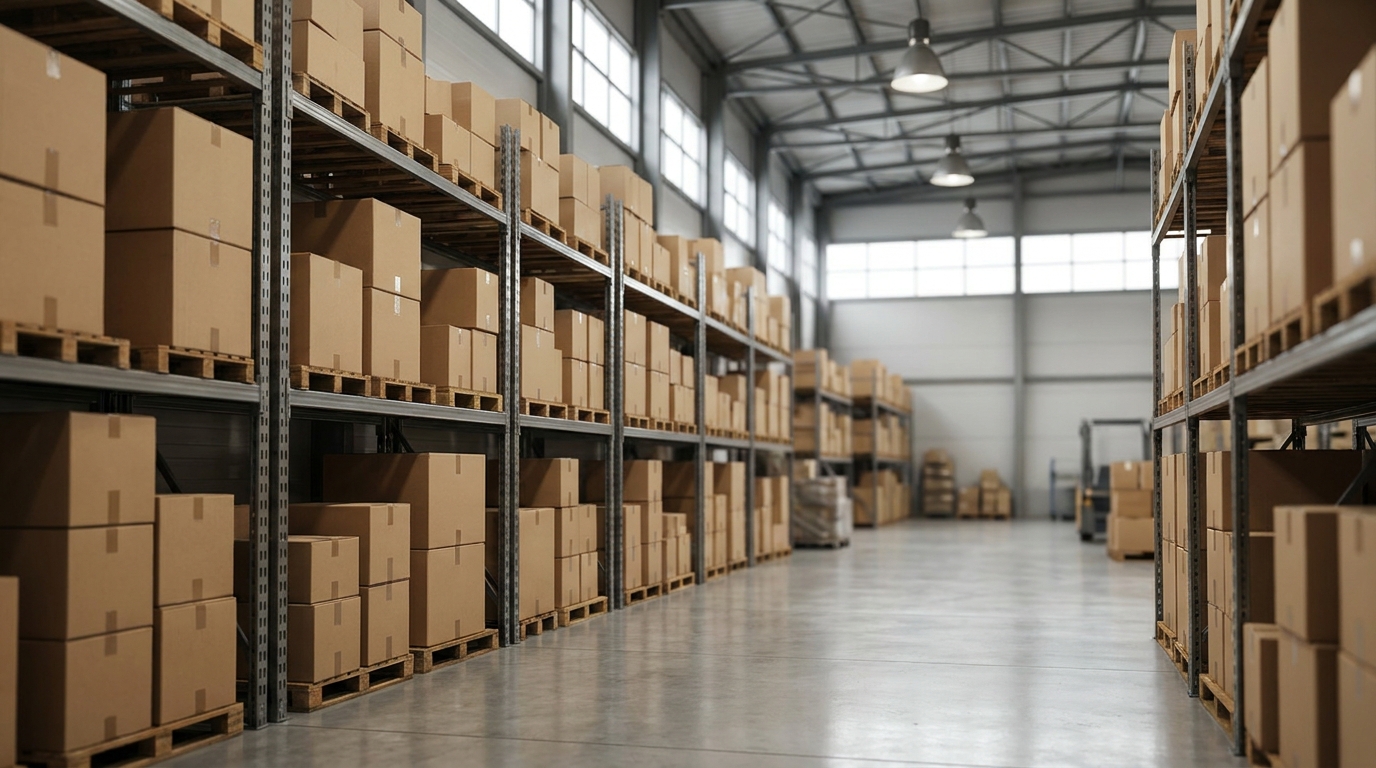
Between the day a supplier delivers your cartons and the day they leave for the port, your goods live in a warehouse. For most buyers that period is one to four weeks, sometimes longer when orders trickle in or a shipment waits for a booking. A Yiwu warehouse service is easy to ignore while everything goes well, and suddenly very important when it does not. This post covers what storage in Yiwu actually involves, what a decent warehouse does with your goods while they sit, and what is worth asking before you send a single carton to one.
To be clear about scope: this is about the storage itself. The receiving, checking and combining of orders is consolidation, and we have a separate post on how that works. Here we look at the quieter middle part.
What your goods are physically doing in there
Picture the reality. A consolidation warehouse in Yiwu holds cargo for many buyers at once. Cartons come in every day from market suppliers, small factories and couriers. Your fifteen cartons of photo frames sit somewhere in that building alongside other people’s toys, tools and textiles, and the single most important thing the warehouse does is keep every buyer’s goods separated and findable.
In practice that means each client’s cargo is assigned a location and recorded against a reference. When your goods arrive they are logged: supplier, date, carton count, weight, dimensions. When more arrive for the same shipment, they are added to the same record and stacked with the rest. When the shipment is prepared, everything under that reference is pulled together and counted again. In our own warehouse in Yiwu this record is the backbone of everything else. Without it, a building full of brown cartons is just a building full of brown cartons.
The unglamorous things that protect your goods
Storage sounds passive. Good storage is not. A few habits separate a warehouse you can trust from a shed with a roof:
- Off the floor. Cartons on pallets or racking, not on bare concrete. Floors get mopped, rain gets tracked in, and cardboard drinks water from below faster than people expect.
- Sensible stacking. Heavy cartons low, light and crushable cartons high, and a limit on stack height. A carton of ceramic mugs placed on top of a carton of gift boxes ruins the gift boxes long before anyone notices.
- Dry and ventilated. Yiwu summers are humid. Goods that sit for weeks in damp air can arrive with soft cartons, spotted metal parts or a musty smell in fabrics. A warehouse cannot change the climate, but airflow, dry floors and not stacking against exterior walls all help.
- Separation of look-alike goods. Two clients importing similar products is common in Yiwu. Physical separation plus clear references is what prevents your cartons from riding in someone else’s container.
- Basic security. A locked building, someone responsible on site, and a record of what came in and went out.
None of this is exotic. All of it is the difference between goods that leave in the condition they arrived and goods that do not.
What you should receive while your goods sit
You are not in the building, so the warehouse’s records are your eyes. At minimum, you should know what has arrived, when, and in what condition. In our case that means updates as deliveries land, photographs of received cargo, and a running total of cartons, weight and volume for the shipment being built. That last number matters more than people realise, because volume is what you will pay freight on, and watching it grow tells you early whether your shipment is heading for the container size you planned. We cover the arithmetic of that in a separate post on CBM and container loading.
Condition reporting deserves a blunt word. If a carton comes in crushed, or a delivery is short, you should hear about it immediately and with photos, not discover it at destination. A warehouse that only ever reports good news is not inspecting anything. Things go wrong in this trade routinely, and the value of staff on the ground is precisely that problems get caught while the supplier is nearby and still motivated to fix them.
How long goods usually stay, and why
Storage time in a consolidation flow is mostly driven by two clocks. The first is supplier delivery: your shipment waits until the last order arrives, and suppliers finish at different speeds. The second is transport: once cargo is complete there may still be days of waiting for a booking, a container, or enough volume if you are sharing space. Around Chinese holidays, both clocks slow down at once, and goods routinely sit longer than anyone planned. If your goods are seasonal, build that into the calendar rather than hoping.
Most warehouses, ours included, include a normal storage window within the consolidation service and treat long stays differently from short ones. How that is structured varies from agent to agent, so ask directly: how long can goods sit before storage is charged separately, and at what point does the warehouse start chasing you for a decision. Get the answer in writing before the goods arrive, not after. We deliberately give no figures here, because terms depend on the cargo and the arrangement, and a number typed in a blog post is exactly the kind of thing that goes stale.
What storage is not
Two honest limits are worth stating. First, a warehouse stores what it received. If a supplier packed the wrong colour inside sealed inner boxes and no inspection was ordered, storage will not discover that. Checking goods properly is a separate activity, ordered separately, and we describe it in our inspection posts.
Second, storage is not insurance. A careful warehouse dramatically reduces the ordinary risks of crushing, damp and mix-ups, but goods in storage and in transit can still be damaged or lost through events nobody controls. Whether and how to insure cargo is a decision for you and your forwarder or insurer, and worth an actual conversation rather than an assumption that someone else has it covered.
Questions worth asking any Yiwu warehouse service
Before you route your first order through any warehouse, including ours, ask these and listen to how concrete the answers are:
- How are my goods identified and kept separate from other clients’ cargo?
- What gets recorded at receiving, and what do I get sent, and how quickly?
- How are cartons stored: floor, pallets, racking? What happens in wet weather?
- What is the normal free storage window and what happens after it?
- Who do I talk to when something arrives damaged, and what happens next?
- Can you photograph or recheck specific cartons on request while goods are in storage?
Vague answers to these questions predict vague handling of your goods. Specific answers usually come from people who actually run the floor.
We operate our own warehouse and consolidation space in Yiwu with our own staff receiving, recording and preparing cargo daily. If you want to know how your particular goods would be handled while they wait, contact us and ask us those six questions yourself. That is what they are for.