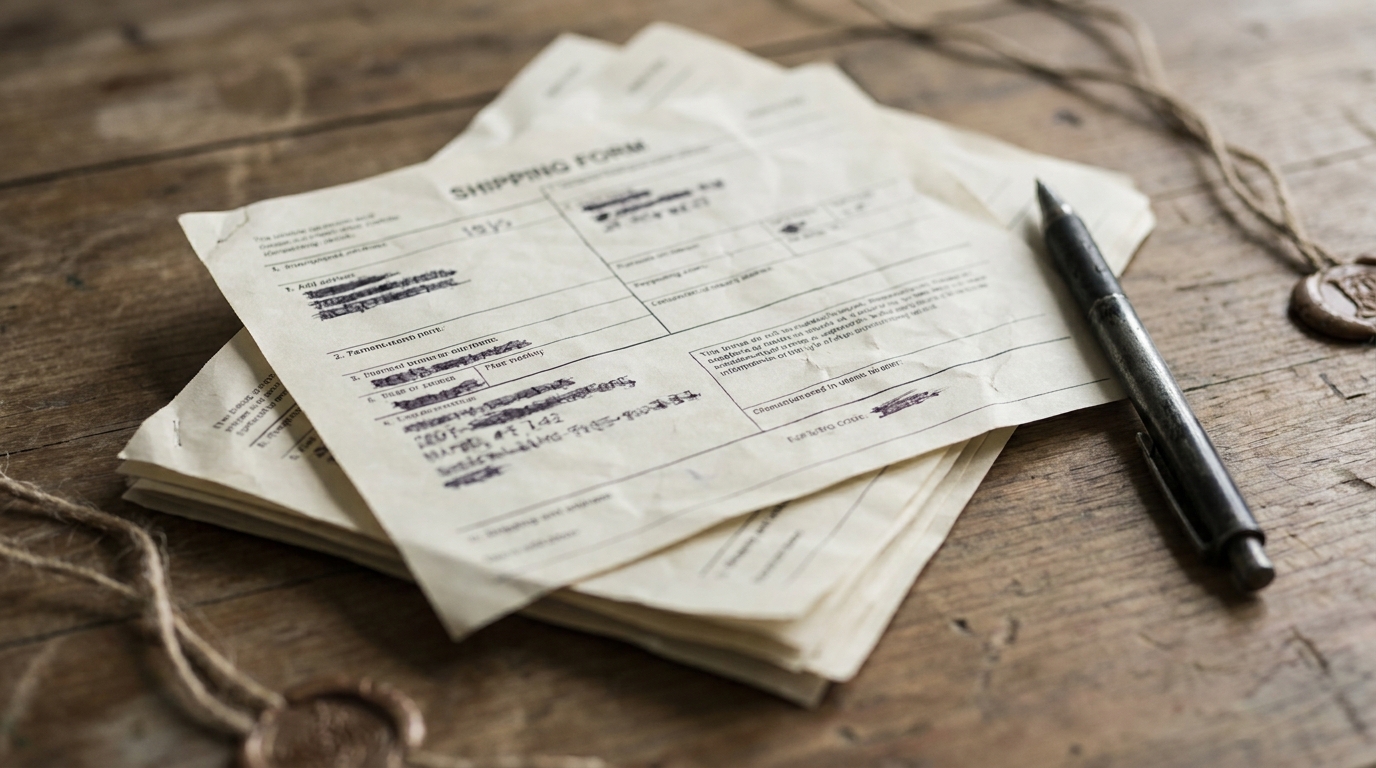
Every shipment that leaves Yiwu travels with a small stack of paper, or more often these days a small stack of PDFs. Buyers tend to ignore the documents until the first time something goes wrong at destination, at which point they matter more than the goods themselves. Part of the work of a Yiwu trade agent is producing this paperwork accurately, and it is worth a buyer understanding what each document is for, because you will be asked for them by your bank, your forwarder and your customs broker. This post describes the documents that commonly accompany a Yiwu shipment and what each one does.
One thing must be said before anything else, and it is not a formality. Documentary requirements depend on the destination country, on the product, and sometimes on how your own broker chooses to handle the entry. What follows is a general description of common practice, not a checklist for your country, and it is not legal or customs advice. Before your first shipment, ask your own customs broker exactly what they need from the China side, and pass that list to your agent. Ten minutes of that conversation prevents most document problems that exist.
The commercial invoice
The commercial invoice is the document that says what the goods are, who sold them, who bought them, and what was paid. For a consolidated Yiwu shipment there is a wrinkle worth understanding: you may have bought from fifteen booths, but the shipment usually travels with one invoice, issued by the exporting company, covering everything in the container. The individual market receipts stay in the background. This is normal for consolidated trade out of Yiwu, and it is one of the quiet services an agent provides, turning a pile of handwritten booth receipts into one coherent export document.
Two things matter to you about the invoice. Descriptions should be real, specific and in English, “stainless steel kitchen tongs” rather than “kitchen items”, because vague descriptions invite questions at destination. And the values shown should be accurate. It is your import entry that is built on this document, and you are the one answerable for it at your end, so review the draft invoice before the shipment leaves rather than after it arrives.
The packing list
The packing list is the invoice’s practical twin. It says how the goods are physically packed: how many cartons, what is in each carton or each range of cartons, the weights, the dimensions. Where the invoice answers “what and how much”, the packing list answers “in which box”.
A good packing list is the document you will personally use most. When the container is unloaded at your warehouse, it is the packing list that tells your staff that cartons 1 to 40 are the blue storage boxes and cartons 41 to 55 are the glassware. When one carton goes missing, it is the packing list that tells you what was in it. Carton numbering on the list should match the marks printed on the cartons themselves, a subject with its own post on marking and labelling.
The transport document: bill of lading, air waybill, rail note
Every mode of transport issues its own document of carriage. For sea freight it is the bill of lading. For air it is the air waybill. For rail to Europe it is a rail consignment note. All of them record the shipper, the consignee, the cargo and the journey, but the sea version deserves special attention because it can behave like a key to the goods.
A traditional original bill of lading must be presented at destination to release the cargo. That gives it real power: whoever holds the originals controls the goods. In modern practice many shipments instead move on what is called a telex release or a sea waybill, where no physical original needs to be couriered around the world and release is arranged electronically. Both approaches are common. Which one your shipment uses is worth deciding deliberately, usually in conversation between your agent, the forwarder and you, because it interacts with how and when the goods are paid for. What you should never do is be surprised at destination to learn you need an original document that is still in China.
Certificate of origin, when it is required
A certificate of origin is a document attesting to where goods were made. Not every shipment needs one. Whether yours does depends entirely on the destination country and the type of entry your broker is making, and in some cases having the right origin document affects how the entry is treated at your end. We are not going to say anything further about what it does or does not get you, because that is squarely a customs matter for your own broker. The practical point is timing: if your broker wants a certificate of origin, say so before the shipment leaves, because arranging one is straightforward when asked for in advance and slow when asked for after the vessel has sailed.
Documents that some products and some destinations add
Beyond the core set, certain shipments carry extras. A few of the common ones, described only so you recognise the names:
- Test reports for product categories where the destination market expects evidence of testing. Whether your product needs one, and to which standard, is a destination question. Raise it with your broker and importer side advisors early, at ordering time, not at shipping time.
- A fumigation or treatment record where wooden packaging is involved. Solid wood pallets and crates moving internationally are commonly expected to carry recognised treatment markings, and warehouses in Yiwu handle this routinely, but it must be planned when the packing is decided.
- Insurance certificates when cargo insurance has been taken for the shipment.
- Any document your own bank requires when payment is made against documents.
Consistency is what actually gets checked
Here is the thing experienced importers know and first-timers learn expensively. Individually perfect documents can still cause trouble if they disagree with each other. The carton count on the packing list should match the bill of lading. The description on the invoice should match the transport document. The weights should agree everywhere they appear. Discrepancies invite questions at destination, and questions cost days.
This is exactly why the documents for a consolidated shipment should be produced by one party who has actually seen the goods. When the warehouse that counted and weighed the cartons is the same operation producing the packing list, the numbers agree because they come from one count. When documents are stitched together from fifteen suppliers’ guesses, they drift.
What to do as the buyer
Your role in the paperwork is small but real. Ask your customs broker at destination what they need before the first shipment moves. Review the draft invoice and packing list while the goods are still in Yiwu, checking descriptions, quantities and your company details. Decide with your agent how the bill of lading will be released. Keep every document from every shipment filed, because they get asked for later at the strangest times.
Do that, and the paperwork becomes what it should be, a boring formality handled by your Yiwu trade agent in the background. The stack of PDFs travels, the goods follow it, and nobody thinks about the documents again. That is what success looks like here: paperwork nobody ever had to argue about.