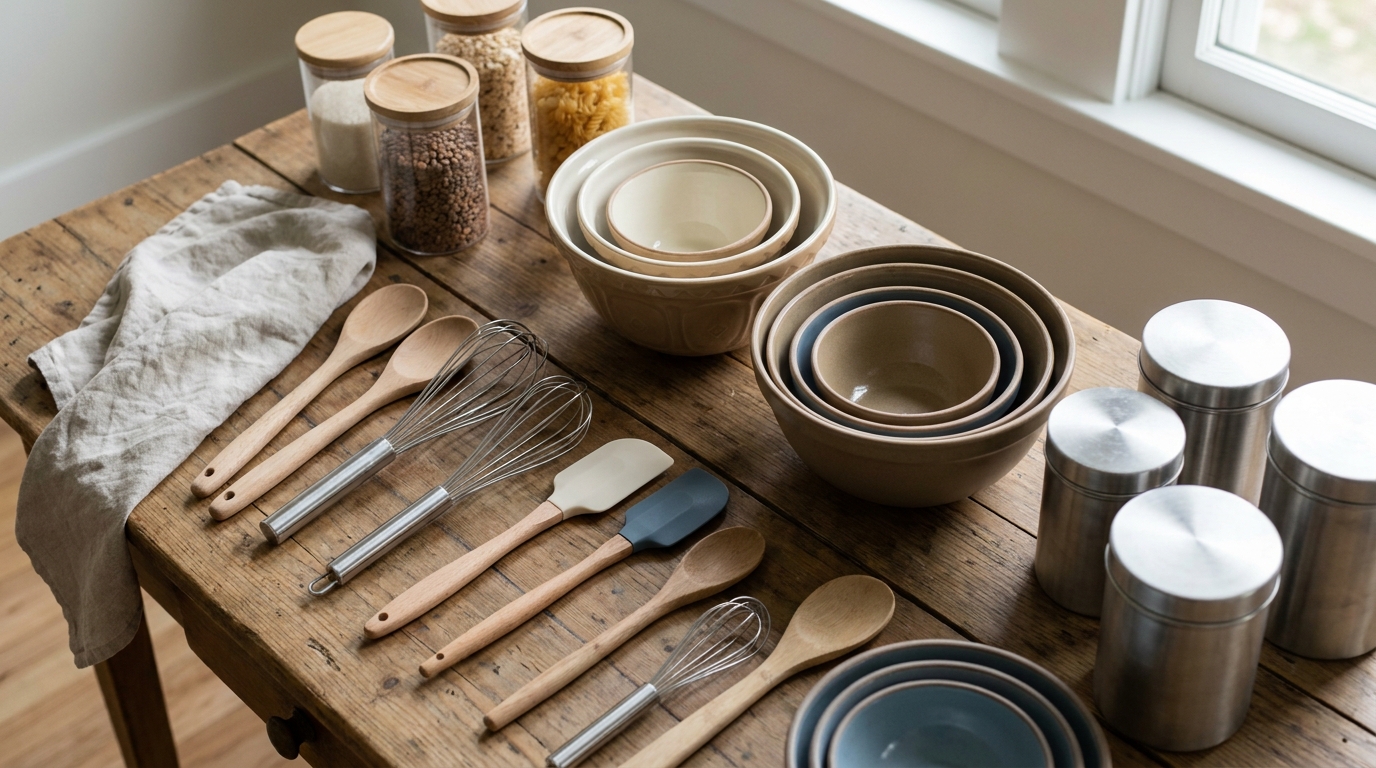
Kitchenware and homeware look like the easiest possible category when you are sourcing products from Yiwu. A silicone spatula is a silicone spatula. A glass storage jar is a glass jar. There is nothing to plug in, usually nothing for a child, and everyone on earth needs the products. And yet this category produces a steady stream of expensive lessons, because its problems hide in places a quick booth visit does not reach: in coatings, in materials touching food, in freight weight, in the physics of glass on a six-week sea voyage. So rather than a tour of the category, here is a tour of the failures. Each section is a thing that actually goes wrong, and what prevents it.
The coating that scratched
Non-stick pans, coated bakeware, painted metal tins. Coatings are the classic gap between the sample and the customer experience, because a coating’s job is to survive months of use and a booth visit lasts minutes. A non-stick surface that looks flawless can be thin, poorly bonded, or applied over badly prepared metal, and none of that is visible.
What helps: ask how many coating layers and what system is used, and put the answer in the order sheet. Rub a sample hard with the rough side of a kitchen sponge for a while and look for dulling. Cook with a sample pan for a fortnight before ordering a container of them; it feels slow, and it is much faster than a return wave. On coated bakeware, check the coating inside corners and seams, which is where application gets lazy.
The food contact question nobody asked
This is the big one, so let us be direct. Anything that touches food or drink, plastic containers, silicone bakeware, melamine plates, stainless bottles, printed mugs, wooden spoons, faces rules in most destination markets about the materials used and what may migrate from them into food. Different materials raise different questions: plastics and their additives, silicone quality, the decoration on the inside of a mug, coatings on metal.
We will not tell you what any market requires, whether any product meets it, or that any material is fine. That is established through testing and advice from qualified professionals in or for your market, and serious buyers budget for it as a normal cost of the category. What we will tell you is what goes wrong in practice: buyers assume that because an item is openly on sale in the market it must be acceptable everywhere, and that assumption is worth nothing. Booth stock serves many markets with many different rules. The importer, which is you, carries the obligation. Ask the compliance question before the order, and treat any supplier paperwork as a starting point for verification rather than an answer.
The glass that arrived as sand
Glassware is cheap in Yiwu and heavy everywhere, and the sea does not care how nicely a jar was made. In our experience, breakage on glass and ceramic shipments is overwhelmingly a packing problem rather than a product problem. Booth-standard packing is often a thin carton with a cardboard grid, adequate for a truck ride across town and hopeless under two other pallets in a container.
Prevention is specific and cheap relative to the loss. Specify the inner packing: cell dividers of real thickness, foam or paper wrap on each piece, double-walled export cartons, and a sensible carton weight so the box at the bottom of the stack survives. Drop-test a packed sample carton from waist height before production packing starts. This is also a place where consolidation helps, because repacking fragile goods properly before loading is exactly the kind of work a warehouse does; our post on repacking and inner boxes covers the mechanics.
The carton that cost more than the goods
Homeware buyers get two nasty freight surprises, in opposite directions. Glass, ceramic and stainless goods are dense, so a modest order hits container weight limits or expensive weight-based charges before the container looks full. Plastic basins, storage boxes and laundry baskets are the reverse, nearly weightless bulk that eats cubic metres. The failure is not the freight bill itself, it is discovering it after committing to the order.
The fix is to think in cartons from the first conversation. Ask carton dimensions, pieces per carton and gross weight at the booth, before agreeing anything. Whether items nest matters enormously: basins that stack inside each other change the economics of the product. A good agent runs this arithmetic while you are still deciding, and our CBM and container loading post explains the sums if you want them.
The stainless steel that was not quite
Steel goods, bottles, lunch boxes, cutlery, mixing bowls, are sold with grade claims made casually. Grades differ in corrosion resistance and cost, and the difference is invisible at the booth. If the grade matters for your product, and for anything holding food or drink it usually does, specify it in writing and verify it through testing rather than trust. A cheaper related failure: “vacuum insulated” bottles that are merely double-walled. Fill a sample with hot water, wait a few hours, and touch the outside. Simple tests beat claims.
The set that arrived incomplete
Homeware loves sets: sixteen-piece dinner sets, knife blocks, bathroom accessory sets, nesting bowls. Sets fail in their own special way, one missing or broken component making the whole unit unsellable. Insist on set completeness checks before shipping, and order a small percentage of spare components where the supplier will agree, because replacing one soap dish across an ocean later is miserable out of all proportion to its value.
The smell, the wobble, and other small tells
A few quick failures that a minute of attention catches at the sample stage. Plastic goods with a strong chemical smell straight out of the bag tend to keep it, and customers mention it in reviews. Chopping boards and furniture-adjacent items that wobble on a flat booth counter will wobble on kitchen counters. Lids are the soul of storage products, so open and close every lid style twenty times and try the seal with water upside down over a sink. Printed decoration on the outside of mugs and glasses should survive a hard fingernail scratch and, ideally, a dishwasher cycle on your sample at home.
What this category rewards
Kitchenware punishes haste and rewards specification. The buyers who do well treat every order sheet as an engineering document: material and grade, coating system, carton spec, inner packing, set contents, decoration method. Sourcing products from Yiwu in this category is less about hunting bargains and more about writing down exactly what you bought, then checking that this is what got made. That checking, between many booths and one container, is where we spend our days. Sourcing Agent Yiwu is a registered company in China with our own staff and warehouse space in Yiwu, and homeware consolidation with proper repacking is bread-and-butter work for us. If you are planning a kitchenware or homeware order, reach us at info@sourcingagentyiwu.com or on WhatsApp at +86 136-6892-2294, and bring your failure questions. We would rather discuss them before the container than after.