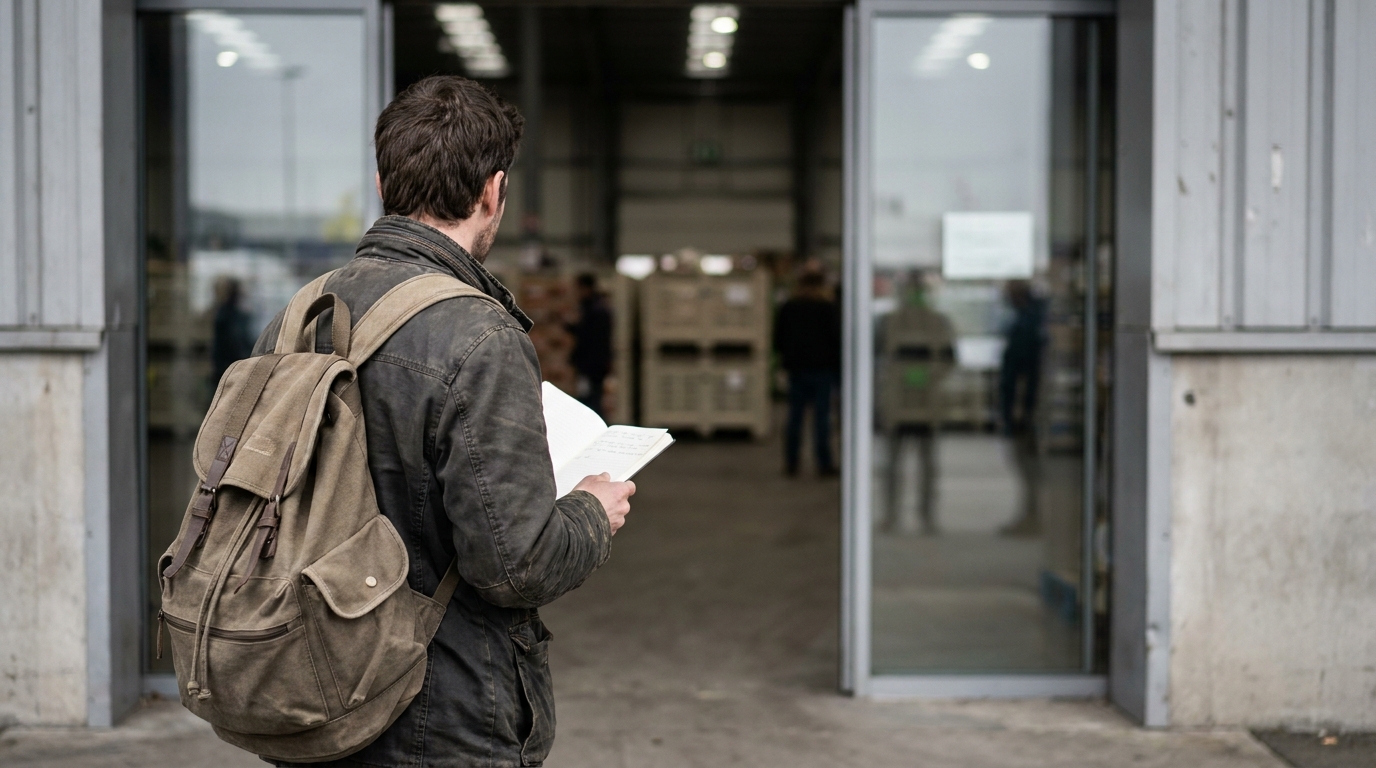
People research how to buy from Yiwu market for weeks before they fly, and then the first day still catches them off guard. Not because anything goes wrong, but because the day itself has a texture that no article quite conveys: the scale, the pace of the conversations, the strange mix of chaos and routine. This post is not a buying manual. Our step by step guide to the purchasing process covers that separately. This is simply an honest account of what a first day inside Futian Market actually feels like, hour by hour, so that yours is less disorienting than most.
Getting there is the easy part
Every taxi driver in the city knows Futian Market, and most hotels can write the district you want on a card in Chinese if you ask at the desk. The ride is short from almost anywhere in Yiwu. Agree with anyone you plan to meet on a specific numbered gate, not just a district, because the entrances are far apart and “I am at the market” narrows your location down to almost nothing.
Arrive close to opening time. Mornings are cooler, booth holders are fresher, and you will want every hour the day gives you.
The first hour: recalibrating your sense of scale
The first thirty minutes are mostly emotional. You walk in expecting a big market and you find corridors that run further than you can see, stacked on floors, repeated across buildings. Most first timers do a slow loop of one hall saying very little. That is normal. Let it happen, then make yourself stop, because wandering in awe is pleasant and produces nothing.
The correction is to shrink your ambition on purpose. You will not see the market today. Nobody sees the market in a day, or a week. Pick the one or two floors that match your product list and treat everything else as scenery for another trip.
What a booth conversation actually looks like
Walk up to a booth that interests you and the pattern is nearly universal. The seller greets you, you point at an item, and out comes the calculator or the phone. They type a number and turn the screen to you. That number is the price in RMB per piece, and almost the first question you will hear is some version of “how many?”, because every answer in this market depends on quantity.
English varies enormously from booth to booth. Some sellers negotiate comfortably in it, others work entirely through the calculator and gestures, and both kinds of conversation can end in a good order. Translation apps fill most gaps. What fills the rest is patience and the shared vocabulary of trade: piece, carton, colour, size, delivery time.
Expect tea. Booth holders sit in that glass box all day and a real conversation often starts with a small cup poured from the ever present kettle. Accepting it costs you two minutes and buys a noticeably warmer exchange.
One thing to understand early: this is a wholesale market. A booth is a showroom for orders, not a shop. Some sellers will sell you a single sample piece, often at a marked up sample price, and some will not sell loose pieces at all. Nobody is being rude when they wave off a request to buy one unit for personal use. It is simply not the business they are in.
Cards, photos and the record you will thank yourself for
By mid morning you will have seen more products than your memory can file. This is where first timers quietly lose the value of the day. Two booths of hair accessories seen three hours apart blur into one, and the evening’s notes dissolve into “the nice lady with the clips”.
The fix is mechanical. At every booth you take seriously: photograph the business card, photograph the booth front with its number visible, photograph the product, and write the quoted price and quantity into your phone against the booth number. Exchange WeChat contacts as well, since WeChat is how the whole market communicates and a contact there is more durable than a card. Do this every single time, even when you are tired, especially when you are tired. The habit feels fussy at ten in the morning and priceless at four in the afternoon.
The middle of the day: lunch and the slump
There are canteens and small restaurants in and around the complex, cheap and quick, full of buyers and sellers eating fast. Take the break even if you do not feel hungry yet. Market fatigue is real and it arrives suddenly: your feet ache from the concrete, the corridors start to look identical, and your judgement flattens out, so that by mid afternoon everything looks either wonderful or worthless. Buyers make their loosest decisions in that state. Eat, sit, drink water, and go back in for a shorter, more focused afternoon session.
What a realistic first day achieves
Here is the honest scorecard. A good first day means you covered one or two floors properly, held real conversations at perhaps a dozen booths, collected clean records for the handful that impressed you, and got indicative prices against quantities. You probably also picked up a few samples, paid small money for them, and started to feel the difference between a corridor’s ordinary goods and its better ones.
What a first day is usually not is a day of placing orders. Committing money in the first afternoon, before you have compared corridors or slept on the numbers, is how people buy the first version of a product instead of the best one. There are exceptions, simple items, obvious quality, a price you have verified elsewhere, but as a default, day one is for looking, recording and shortlisting. The orders can come on day two or three, and they will be better for the wait.
Day two is a different experience
Something changes overnight. The layout logic settles in, the calculator ritual feels routine, and you stop photographing everything and start photographing the right things. On day two you walk back into the corridors that mattered, reopen the best conversations with real quantities, and the market begins to work for you rather than around you. Most buyers describe the second day as the day the trip started paying for itself.
Doing the first day with someone who has done hundreds
Everything above is manageable alone, and plenty of buyers manage it. The difference an agent makes on a first day is mostly time and translation: knowing which floors fit your list before you land, carrying the language gaps, keeping the records while you keep your attention on the goods, and gently flagging when a quoted price deserves a second conversation. If you would like that kind of first day, or you want to talk through how to buy from Yiwu market before you book flights, write to info@sourcingagentyiwu.com or reach us on WhatsApp at +86 136-6892-2294. And before you plan dates, check our note on market opening hours and holidays, because arriving during the wrong week is the one first day mistake that cannot be fixed on site.