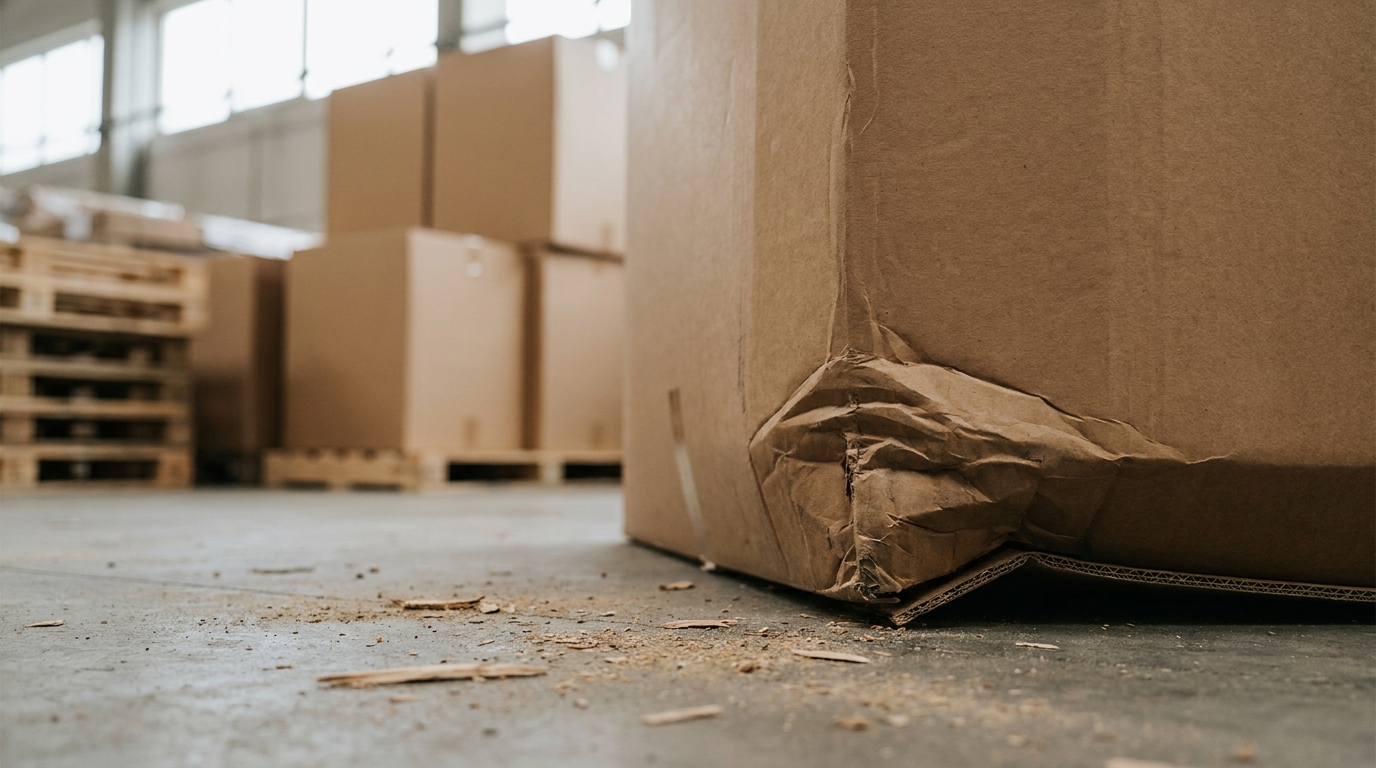
Goods that leave a Yiwu warehouse in perfect condition can arrive at the other end scuffed, crushed or broken, and when that happens the argument about whose fault it was is rarely satisfying for anyone. The better approach is to treat transit damage as something you engineer against before the shipment moves. We handle Yiwu buying and shipping as one process, and that matters here, because most of the protection against damage is decided at ordering and packing time, long before a container is booked. This post goes through where damage actually happens, and the specific choices that reduce it.
Where damage really comes from
Buyers picture storms at sea. In our experience the ocean crossing itself is the calmest part of the journey. The real risks concentrate in a few places:
- Handling. Every time a carton is lifted, trucked, tipped or restacked, something can go wrong. LCL cargo, which is handled at a freight station alongside strangers’ goods, sees more of this than a container loaded and sealed at the warehouse door.
- Crushing. Cartons at the bottom of a stack carry everything above them for weeks. Weak cartons fail slowly and quietly.
- Moisture. A container crossing climate zones breathes. Warm humid air inside meets cold steel, condensation forms and drips, and cartons at the top and sides get damp. People in the trade call it container rain, and it ruins paper goods, rusts cheap hardware and marks textiles.
- Vibration and shock. Road and rail legs shake cargo for hours. Anything that can rub, rattle or settle inside its packing, will.
Notice that every one of those risks is influenced by decisions made in Yiwu, not on the water. That is the whole thesis of this post.
The carton is the first decision, and it happens at ordering
Market suppliers pack for the domestic journey their goods usually make, a short truck ride across a city. The standard carton that survives that trip may not survive six weeks of international freight with other cargo stacked on top. This is not a scandal and it is not dishonesty, it is a default, and defaults can be changed.
The time to change them is when the order is placed. Ask for export quality cartons, specify double wall board for anything heavy or fragile, and put it on the order sheet in writing next to the price. Some suppliers charge a little more for stronger cartons. Pay it. It is the cheapest insurance in the whole shipping chain. When the goods reach the warehouse, the receiving check includes a look at the cartons themselves, and a carton that arrives already soft or already splitting is a problem to fix then, with the supplier ten minutes away, not at destination.
What happens when cartons need to be opened, combined or packed again in the warehouse is its own subject, and we have a separate post on repacking and inner boxes. Here I will only say that inner packing matters as much as the outer carton. Sixty ceramic mugs in a strong carton with no dividers is still a box of future fragments.
Packing for the mode the goods will actually travel
A shipment is packed well when it is packed for its journey, and the journeys differ.
Full containers loaded in Yiwu
When a container is loaded at the warehouse, the loading plan is the protection. Heavy cartons go low, light and crushable cartons go high. Weight spreads across the floor rather than piling at one end. Gaps get filled, because a stack that cannot shift cannot fall. The last tier before the doors is braced so nothing greets the person who opens the container at destination. None of this is exotic. It is an hour of care by people who load containers every week, and it is the argument for loading where your goods are checked rather than somewhere down the chain.
LCL shipments
For LCL, assume more handling and unknown neighbours. Cartons should be strong enough to be stacked under someone else’s cargo, and for fragile or valuable goods it is often worth palletising, putting the cartons on a wooden pallet, strapping and stretch wrapping them into a single unit. A pallet costs volume, and volume is what you pay for, so this is a genuine trade-off rather than an automatic answer. Our rule of thumb is that goods which cannot tolerate a dropped or thrown carton should travel palletised, and cheap sturdy goods can take their chances loose. Where wood is used, the pallets need the recognised treatment markings for international movement, which the warehouse arranges as standard.
Air and express
Courier networks are fast and not gentle. Parcels travel on belts and slides and get handled many times in a short journey. Small boxes need filling material so contents cannot move at all, and single cartons should be within sensible weight limits for one person to lift, because a carton that is awkward to lift is a carton that gets dropped.
Moisture, the quiet destroyer
Damp damage is the kind you find weeks later, at the bottom of a stack, when claims are hard and memories are short. The defences are simple and cheap. Desiccant bags inside cartons for moisture sensitive goods, and larger desiccant units hung inside the container for shipments crossing into winter or out of the humid season. Plastic liner bags inside cartons for paper products and boxed goods whose retail packaging matters, because for many products the retail box is the product, and a water stained gift box is unsellable even when the item inside is fine. Keeping cartons off direct contact with the container floor helps too. None of this is expensive. All of it has to be thought of before the doors close.
Mixing goods that should not travel together
A consolidated shipment puts many products in one box, and some combinations are unwise. Strongly scented goods, incense, scented candles, some cleaning products, will share their smell with textiles and plush toys packed alongside them for a month. Anything that can leak should never ride above anything that can stain. Heavy hardware should not share a carton, or a stack, with brittle goods. When we plan a mixed loading, these adjacencies are part of the plan, and it is worth telling your agent about any product in your order that smells, leaks, or crushes, because the person planning the load cannot smell a PDF.
Evidence, insurance and what to do on arrival
However well a shipment is packed, you should behave as if a claim might one day be needed. That means evidence at both ends. The warehouse photographs goods and cartons at receiving and at loading, including the loaded container before the doors close and the seal after. At your end, photograph the seal before it is cut, the doors as they open, and any damage exactly as found, before anything is moved. Note damage on the delivery paperwork at the moment of delivery, not the next day.
Cargo insurance for international shipments exists and is not expensive relative to the value it covers. Whether to take it is your decision per shipment, and no packing method makes it pointless, because packing reduces risk and never removes it. What good evidence and insurance do together is turn a bad day into a process rather than a loss.
The short version
Specify strong cartons when ordering. Check them at receiving. Pack for the actual mode, palletise what deserves it, fill every gap. Take moisture seriously in every season. Keep hostile goods apart. Photograph everything, and insure what you cannot afford to lose. Transit damage never falls to zero, anyone who says otherwise is selling something, but shipments prepared this way arrive boring far more often than not, and boring is exactly what Yiwu buying and shipping should feel like when it is done properly.