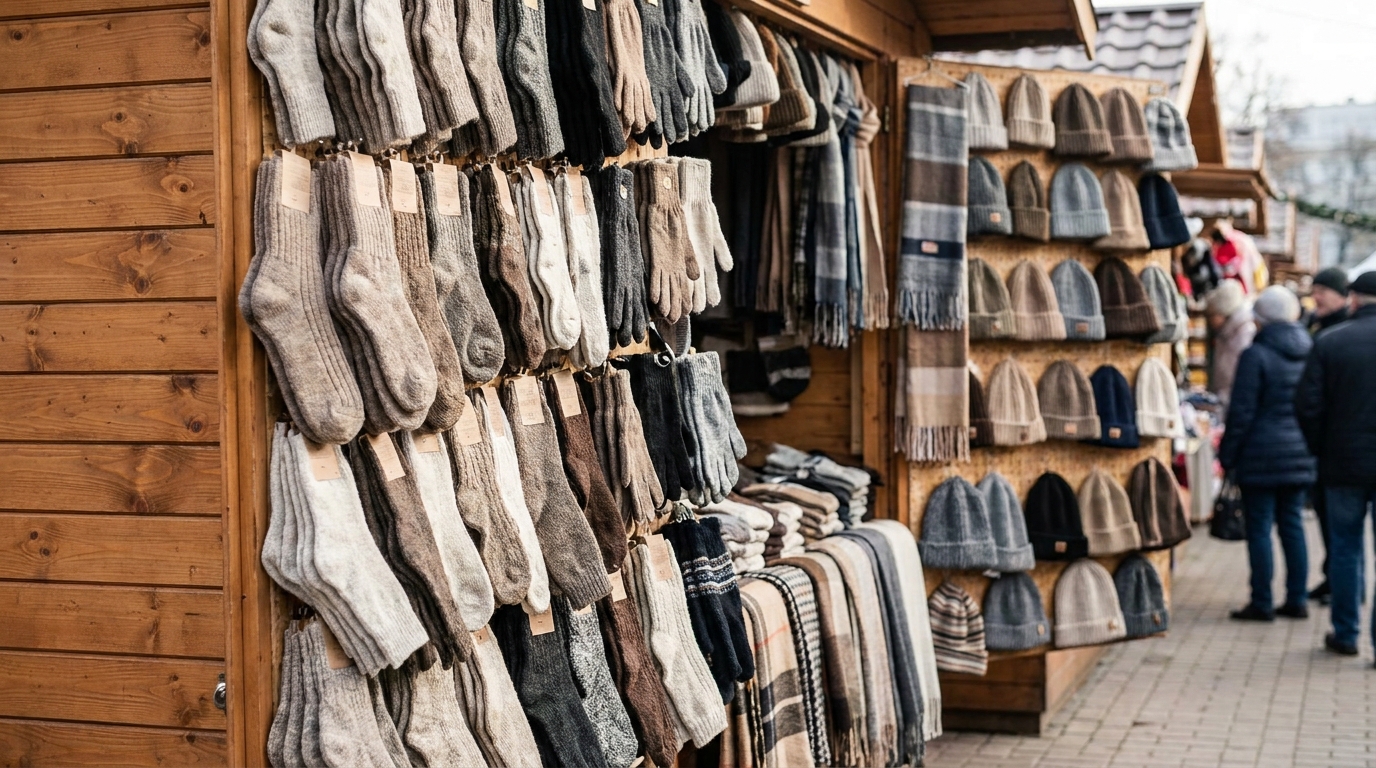
Stand in the sock aisles of District 4 long enough and the booths begin to blur. Wall after wall of ankle socks, crew socks, kids socks in cartoon colours, all folded the same way, all lit the same way, most within pennies of each other on price. New buyers find the sameness reassuring, as if the category has no wrong answers. It is exactly backwards. When everything looks identical, the differences have gone somewhere you cannot see them, into the yarn, the knitting machine and the finishing. Reading those differences is the actual work of this district, and it is the reason a buyer who uses a Yiwu wholesale agent here is mostly paying for a second pair of hands and a trained sense of touch.
One note before the detail, because it confuses people with a booth address in hand. This district is written as Yiwu Market District 4, as Futian Market District 4 and as Yiwu International Trade City District 4, depending on whose signage, invoice or business card you are reading. They are all the same building.
District 4 is the textile district in the everyday sense of the word: socks, gloves, hats, scarves, ties, towels, underwear, shoelaces, bras, and the broad category the market calls daily necessities. Not fashion garments, which largely live elsewhere in Yiwu, but the textile goods every household buys on repeat. That repeat purchase nature shapes everything about how the district trades.
Reading a sock booth
Socks are sold by weight of material as much as by design. Ask any serious booth about a sock and the answer comes back in yarn terms: the cotton share of the blend, the yarn count, whether the toe seam is hand linked or machine closed, the grams per pair. Two socks with the same photo can differ on every one of those points, and the price difference between them is small per pair and enormous per container.
So handle everything. Stretch the cuff and watch how it recovers. Hold a white sock up to the light to judge the knit density. Rub the surface to see how quickly it pills. Then ask for the composition in writing, because “cotton socks” at a booth can mean a blend with a cotton share far lower than the word suggests, and the label your market requires will need the real number anyway. Fibre content labelling is regulated in most destination countries, and the rules are your side of the deal to confirm, not the seller’s.
Sizing deserves one more paragraph. Chinese size runs do not map neatly onto European or American feet, and a booth’s “free size” is a statement of optimism, not measurement. Send your size specification rather than accepting theirs, and check the first production pair against a tape measure, not against a glance.
Gloves, hats and the upside down calendar
The winter goods zone runs on a calendar that surprises everyone the first time. Knitted hats, gloves and scarves for the northern winter are ordered in the heat of summer, produced through autumn, and are largely finished business by the time the first frost arrives. Walk in during November hoping to buy winter stock for that same winter and you will find booths already showing next spring, with production slots gone and only leftover stock to offer. The reorder that saves your season does not exist in this district. The early order does.
Plan winter textiles at least half a year out, and treat the market’s quiet summer months as your buying window for the cold season. The same logic runs in reverse for straw hats, sun hats and summer scarves. If you sell both seasons, you are effectively running two order calendars a year, each landing when your shelves are full of the opposite season. It feels wrong. It is correct.
Towels, underwear and the daily textiles
The daily textile aisles trade on grams and fibre the same way socks do. A towel is quoted by its weight per piece and its material, and the difference between a hotel weight towel and a promotional giveaway towel is a number, not an adjective. Decide the gram weight your market expects before you arrive, because “good quality towel” is not a specification anyone can produce against.
Underwear and baseline garments add fit to the equation, which makes sampling non negotiable. Order size sets, put them on real people, and only then commit. This is also a category where the packaging conversation matters early: individually bagged with a printed insert is a different cost and a different product from bulk packed dozens, and destination markets often have labelling requirements for textiles that the packaging has to carry. One line in the order sheet settles what a dispute later cannot.
How orders and minimums behave here
The knitting machines set the rules. A machine runs one design in one colourway for a stretch, and the minimum reflects the run, which is why minimums in District 4 are quoted per design per colour and are stickier than the friendly unit prices suggest. Where sellers show flexibility is across sizes within a design, and in mixed cartons of an established design range they already produce. A custom design with your own pattern raises the bar significantly, since it means programming and yarn purchasing for you alone.
Prices move with cotton and yarn markets, so treat old quotes as history, and expect the honest booths to say so plainly. Negotiation here follows the textile logic: the lever is the yarn spec and the packing, not the seller’s margin. A buyer who says “make it cheaper” gets a lighter sock. A buyer who says “same spec, better price at double the colours” gets a conversation.
Colour continuity is the reorder risk. Yarn is dyed in lots, and the navy of your second order can sit just off the navy of your first. Keep a reference pair from every delivery, and flag colour matching in writing when a reorder must sit beside old stock on the same shelf. We keep reference samples for buyers at our warehouse in Yiwu for exactly this reason, and it has ended more than one argument before it started.
The order that comes back
What makes District 4 rewarding is the same thing that makes it competitive: these goods reorder. A sock line that fits, holds its colour and lands on time becomes a quiet permanent line in a shop, reordered for years. The buyers who get there all did the same unglamorous things. They specified the yarn and the grams, they sampled on real bodies, they ordered winter in summer, and they kept a reference sample of everything.
So before you order in this district: composition and weight in writing, your own size chart, packaging and labels agreed, the seasonal calendar respected, and a plan for who checks the goods before they ship. None of it is difficult. All of it is the difference between a one time order and a line you reorder without thinking, which in daily textiles is where the actual money lives.
Much of the work of a Yiwu District 4 sourcing agent in this district is unglamorous measuring and counting, done before the order is confirmed rather than after it lands.