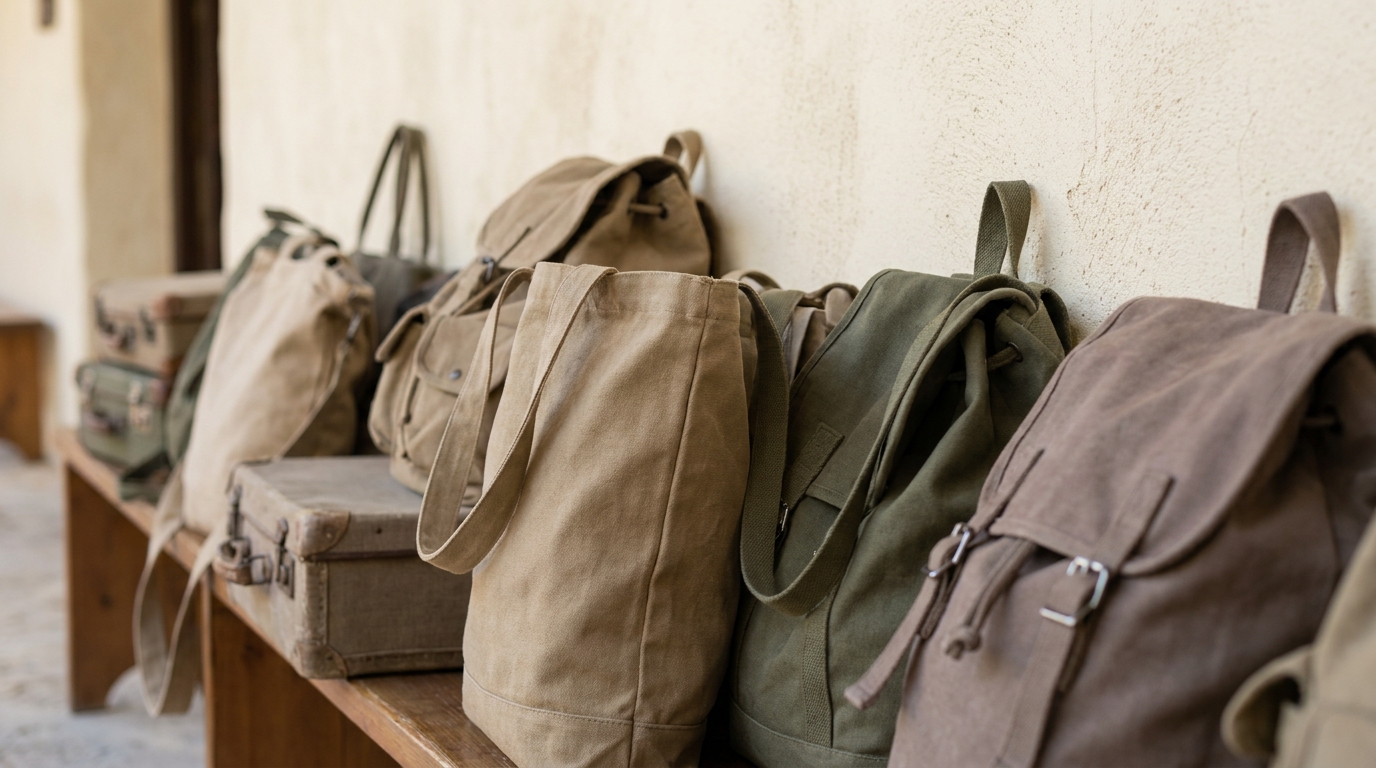
Every category guide on this site has a theme, and for bags and luggage the theme chose itself: volume. Bags are the category where the product is, in a sense, packaging. A backpack is a shaped void. A suitcase is a box you buy in order to fill. So when you plan Yiwu factory sourcing for bags, the questions that decide your margin are less “what does the bag cost” and more “how many bags fit in a carton, how many cartons in a container, and what survives the trip”. This guide is organised around exactly that: the journey from a booth sample to a packed container, with the quality checks placed where they actually happen along the way.
Start at the end: what a container of bags looks like
Picture the destination first. A sea container filled with luggage is one of the lightest containers you will ever ship, all shell and air, hitting its volume limit long before any weight limit. A container of ladies’ handbags, densely folded and stuffed, is closer to a normal cargo. The same freight cost spreads over very different unit counts depending on how the goods pack, which means two bags with identical booth prices can land in your country at genuinely different real costs. Run that arithmetic before falling in love with a design, and if the sums are new to you, our post on CBM and container loading walks through them.
The practical habit: from the very first booth conversation, ask three numbers alongside the price. Pieces per carton. Carton dimensions. Gross weight. Booths that sell for export know these instantly, and a booth that cannot answer is telling you something about how often it exports.
Soft goods fold, and folding is a specification
Most non-rigid bags, shoppers, backpacks, duffels, pouches, ship folded, and how they are folded is negotiable in a way beginners never think to negotiate. Folded flat with the straps inside, a backpack occupies a fraction of its assembled volume. Stuffed with paper to hold its shape, it occupies far more but arrives looking shop-ready, without deep creases across the front panel.
Neither answer is right. A bag with structured foam panels can be permanently marked by a tight fold, and a cheap tote does not care what you do to it. Decide per product, put the folding and stuffing method in the order sheet, and ask for a photo of the first packed carton before the rest are sealed. Creasing from over-tight packing is one of the most common complaints in the category, and it is entirely preventable at this step.
Hard luggage does not fold, so it nests
Rigid suitcases handle volume differently: sets. The classic three-piece set nests like Russian dolls, the small case inside the medium inside the large, one boxed unit occupying scarcely more space than the largest case alone. That nesting is why luggage sets dominate the export trade, and it changes your buying decision: you are choosing a set of three sizes as a single product, so check all three, not just the big one that is easiest to inspect.
While a case is open in your hands, this is the moment for the structural checks. Roll it, loaded with a few kilos borrowed from around the booth, across the roughest floor you can find. Extend and collapse the trolley handle a few dozen times, listening for grit and feeling for wobble at full extension. Look at how the wheels attach, screwed housings being far friendlier to future repair than rivets. Sit the case on its side and press the shell: flex is normal, creaking and oil-canning are warnings.
Zips, stitching and hardware: check them at the packing stage, not just the sample stage
Everyone checks the sample’s zip. The discipline that separates experienced buyers is checking the shipment’s zips, because zips, sliders, stitching density and hardware finish are exactly the components a factory can quietly downgrade between sample and production when a price was squeezed. On the sample, run every zip end to end twenty times, load the bag and lift it by each handle in turn, and examine stitches per inch on the stress seams where straps meet the body; on load-bearing seams look for bar tacks or box stitching rather than a single straight line of thread.
Then make those points the explicit focus of the pre-shipment check. An inspection on bags that only counts cartons misses the entire category risk. What a proper inspection covers has its own post; for bags, insist the checklist names zips, seam stitching, handle attachment and hardware plating, and that the inspector actually loads a few units.
Materials, honestly described
The market sells bags in synthetic leather, coated fabrics, canvas, nylon and polyester of many grades, and descriptions at the booth are optimistic. Two habits protect you. First, get the material named precisely in the order sheet, including fabric weight or denier where relevant, so there is a specification to check against. Second, be careful how you describe materials onward to your own customers, since a description a booth used casually can become a claim you are legally making in your market. Anything marketed for children, small novelty backpacks with attached toys or decorations for instance, can bring child-related product rules into play in your destination market, and confirming what applies is your responsibility, settled with a qualified party rather than assumed.
Smell deserves one line: coated synthetic bags packed tightly can arrive with a strong odour, and airing stock takes warehouse time you should plan for rather than discover.
Cartons, weights and the person who lifts them
A last packing point that is easy to miss. Bag cartons are large, and large cartons filled with dense handbags become heavy in a way that damages both the carton and the back of whoever moves it. Agree a sensible maximum gross weight per carton and a carton quality that survives stacking; a burst carton in transit usually means dirty, scuffed goods at arrival, and scuffed is unsellable in this appearance-driven category. Carton marking matters more with bags than with most goods too, because mixed orders with many styles and colours in near-identical cartons are painful to receive unmarked. Our carton marking and labelling post covers the system worth asking for.
Putting an order together
MOQ in the category varies widely, by booth, by style and by whether a colour or logo change is involved, and it is negotiated rather than fixed. Custom logos, printed linings and colour runs push quantities up and lead times out; buying booth designs as they stand keeps both down, and a sensible first order usually mixes a few booth-standard styles to learn the market before committing to anything custom. Yiwu factory sourcing for bags rewards the buyer who treats packing as part of the product, which is the whole argument of this page.
Sourcing Agent Yiwu is a registered company in China with our own staff in the market and warehouse and consolidation space in Yiwu, where bag orders from multiple booths get checked, repacked where the packing is not export-worthy, marked and loaded. If bags or luggage are your category, write to info@sourcingagentyiwu.com or WhatsApp +86 136-6892-2294 with the styles you have in mind, and we will start with the three numbers that matter: pieces per carton, carton size, and weight.