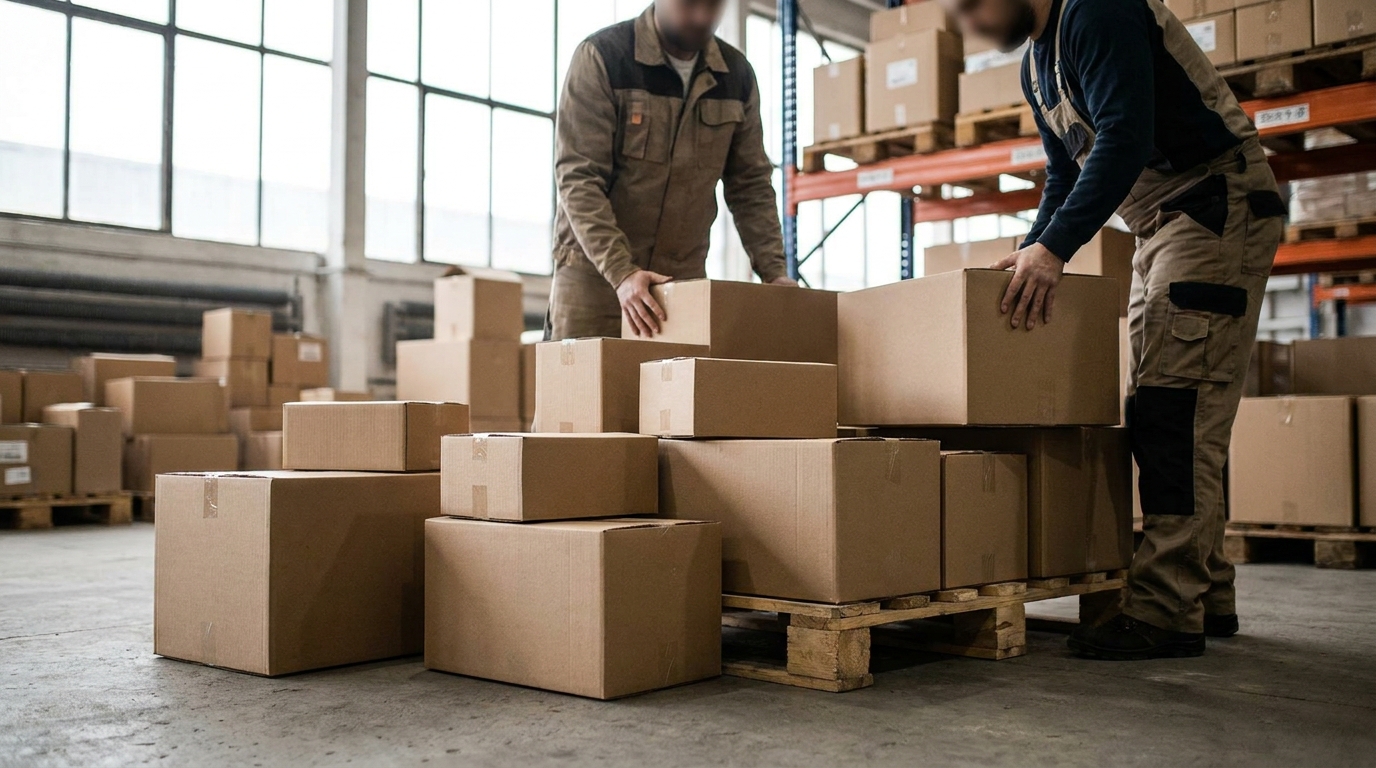
The mixed container is the whole point of Yiwu. One box on one ship, filled with goods from twenty or forty different suppliers: toys from District 1, socks from District 4, party goods from a booth you found on your last afternoon. No single factory in the world will sell you that assortment, but this market will, and a Yiwu consolidation service exists to gather it into one shipment. What gets less attention is the planning that happens before any carton reaches a warehouse. A mixed container is planned on the buyer’s side first, as an order list, a budget and a calendar, and that planning is what this piece covers. The loading maths, the CBM arithmetic and what fits in which box, lives in our separate piece on understanding CBM and container loading, and we will point there rather than repeat it.
Start from the container, not from the products
The natural instinct is to wander the market, fall for products, and then see what the pile adds up to. It works better in reverse. Decide the shipment first: roughly how much space you are filling, roughly what budget it carries, and the date you need it to land. A 20ft container holds roughly 28 usable cubic metres, which is the only number we will use here; what matters for planning is that your space is finite and every product on your list is bidding for a share of it. With the frame fixed, every buying decision becomes a comparison. This item earns its two cubic metres, that one does not.
If your total will not come close to filling a container, that is not a failure, it changes the plan. Smaller consolidated volumes ship as groupage alongside other buyers’ cargo, and our shipping pieces cover those options. The planning logic below still applies; only the box changes.
Building the order list
The working document for a mixed container is a plain list, and ours carry the same columns for every client: supplier and booth reference, item, unit price, quantity, units per carton, carton count, estimated volume and weight, deposit and balance status, promised ready date. Keep it in a spreadsheet from the first day of buying, not reconstructed afterwards from receipts and memory. Every decision you will make later, what to cut, what to bump to the next shipment, whether the container is full, gets made by sorting this list.
Two tensions shape the list. The first is minimum order quantities. Booth MOQs are usually modest, which is exactly why mixed containers from Yiwu work, but they still set a floor per product, and twenty floors add up. Our piece on how minimum order quantities work in Yiwu covers the negotiation side; at the planning level, the point is that each product line you add commits a chunk of money and space, so a list of sixty small lines is a different shipment from a list of twelve deep ones. More lines means more variety on your shelves, but also more suppliers to chase, more cartons to check, and more small things that can each go slightly wrong.
The second tension is between money density and space density. Some goods are cheap and bulky, inflatable toys, plastic storage, artificial flowers. Others are expensive and tiny, jewellery, watch batteries, phone accessories. A container of only the first ties up little cash but may not carry enough sale value to justify the freight. A container of only the second wastes the space you paid for. Experienced buyers mix deliberately: bulky goods to fill the cube, dense goods to carry the value, and the list tells you your current balance at a glance.
Getting everything to arrive in the same window
A mixed container has a timing problem baked in: forty suppliers will not finish on the same day unless someone arranges it. Goods that arrive at the warehouse six weeks early sit there, and storage is rarely free forever. Goods that arrive late hold the whole container hostage. The technique is to sequence orders by production time, longest first, so deliveries converge on the warehouse inside a window of a week or two just ahead of loading. Identify your slowest items early, usually anything custom-printed or made to order, and start them first; buy the pure stock items last, since they can be collected in days. We have a full piece on planning lead times for Yiwu orders that works through this, including the holiday effects that bend every schedule, so here we will only insist on the habit: put a promised ready date next to every line on the list, and re-sort by that column weekly.
Cartons, marking and knowing what is where
When forty suppliers pack cartons for one container, the cartons arrive speaking forty dialects. Some are marked clearly, some are blank, some reuse boxes from an entirely different product. Sorting that out is warehouse work, and our piece on carton marking and labelling for Yiwu shipments covers the system in detail. At the planning stage your job is simpler: assign each supplier a shipping mark and item numbers from your own list, and put them on the order sheet so the supplier packs and marks accordingly. When the container is unpacked on your side, weeks later and far away, the marks on the cartons should map straight back to the lines on your spreadsheet. Buyers who skip this meet their shipment as a wall of anonymous brown boxes.
Think, too, about unloading order at destination if your goods go to more than one place. Cartons for your second shop are better loaded last so they come out first. Small thing to plan, tedious thing to fix.
One shipment, one set of paperwork, one set of rules
A mixed container travels as one shipment with one set of documents, and every product in it appears on that paperwork. The documents themselves are covered in our piece on what travels with a Yiwu shipment. The planning consequence is worth stating here: each product category you add can bring its own requirements at import, and one problematic item can hold up the whole container at your border, not just its own carton. What those requirements are for your country, whether a product needs testing, marking or anything else, and what duties apply, are questions for your customs broker and your own authorities, and we would be inventing things if we answered them from a warehouse in Zhejiang. Ask before the product goes on the list, not when the container is on the water. It is the cheapest question in this whole process.
Leave room, in every sense
Final habits from watching many of these shipments come together. Do not plan the container to the last cubic centimetre; estimates drift, cartons run larger than quoted, and a little slack means a late surprise does not force a cut. Hold back a slice of budget for the product you have not found yet, because you will find it in the market on the last day, you always do. And accept that the first mixed container is a rehearsal for the second: the list you build, the marks you assign and the records you keep are the machinery you will reuse, which is also why reordering well is its own subject on this blog. A Yiwu consolidation service can carry the collecting, checking and loading for you, and that is our daily work, but the shape of the shipment is a set of decisions only the buyer can make. Make them on paper, early, and the container almost packs itself. If you want a template of the order list we use, ask and we will send it over.