Ask a booth holder in Yiwu how long an order will take and you will get an answer. The answer will usually be optimistic. Not dishonest, just optimistic, in the way that anyone quoting their own turnaround tends to be. Planning lead times for Yiwu orders means understanding what that quoted number actually covers, what it quietly leaves out, and where the calendar itself will fight you. We run a Yiwu procurement service and we spend a surprising amount of our time on exactly this, chasing dates and re-sequencing orders, so this piece is the honest version of how time behaves in this market.
Stock time and production time are different animals
The first split to make in your head is between stock goods and made-to-order goods. If a booth has your item sitting in a warehouse, the lead time is essentially handling: confirming the order, moving cartons across town, checking them in. Days, not weeks, in the normal run of things. The moment anything is made for you, printed for you, or packed specially for you, you are in production time, and production time is quoted by the supplier, not by physics. Two booths selling near-identical items can quote very different production windows because behind each booth sits a different workshop with a different queue.
When a supplier quotes a production time, ask what starts the clock. Usually it is the deposit, not the conversation. An order agreed on Friday with a deposit paid the following Thursday starts on Thursday. This single misunderstanding accounts for a good share of the “my order is late” messages we see, and it was never late at all.
What the quoted time leaves out
A supplier’s quoted window typically covers making the goods. It rarely covers everything before and after. Before: sourcing your items in the first place, agreeing specifications, and samples. If you need a pre-production sample approved, and on custom goods you usually should, add the time to make it, ship it or photograph it, and for you to respond. A sample round can add more time than the production itself, and buyers who sit on a sample for two weeks then ask why the order slipped have answered their own question.
After production comes the tail: inspection if you are having one, rework if inspection finds something, carton marking, and the wait for the rest of your order. That last one matters more than people expect and we will come back to it.
The calendar is not neutral
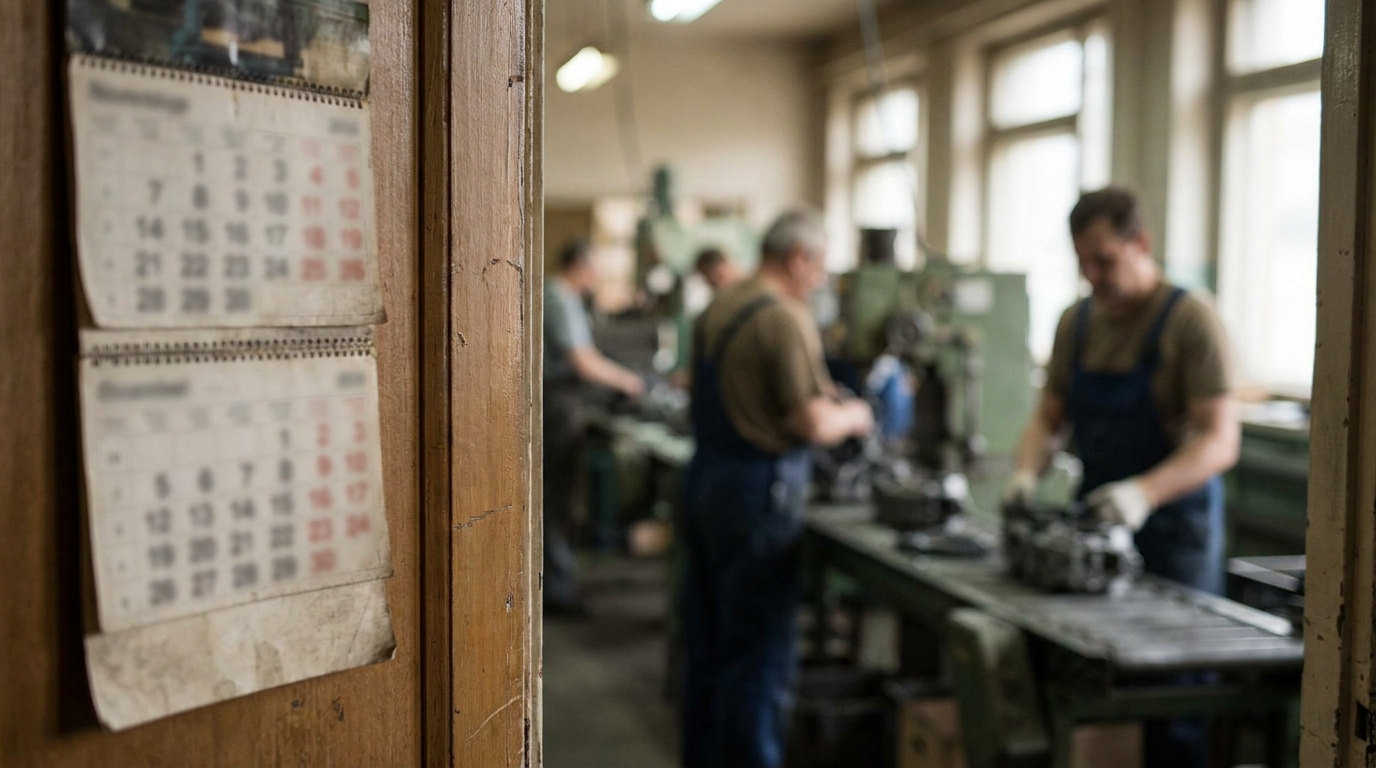
Two features of the Chinese calendar bend every Yiwu schedule. The big one is Chinese New Year, falling in January or February depending on the year. It is not a long weekend. Workshops wind down beforehand, workers travel home, and production restarts gradually afterwards, sometimes with different staff on the machines, which has its own quality implications. Orders that need to ship before the holiday have to be placed well in advance, because every other buyer has the same idea and workshop queues swell. The weeks straight after the holiday are also slower than newcomers expect. If your order brushes against this period in either direction, raise it explicitly with the supplier and get dates in writing.
The second feature is seasonal demand. Yiwu is a huge source of seasonal goods, and the people who buy Christmas decorations do so many months before December. If your product has a season, the workshops that make it are busiest well ahead of that season, and lead times stretch exactly when you most need them not to. There are also shorter public holidays through the year that pause things for days at a time. None of this is a crisis if you plan for it, all of it is a crisis if you discover it after paying a deposit.
A mixed order moves at the pace of its slowest item
Here is the structural point that dominates real planning. Most Yiwu shipments are consolidations: goods from many suppliers collected into one warehouse and shipped together. That means your shipment date is set by your slowest supplier. Nineteen suppliers can deliver in a week, and the twentieth, the one making your custom-printed boxes, quotes four. Your container waits on the boxes.
You have a few honest options when that happens. Wait, and accept the date. Split the shipment, and pay for two. Drop or substitute the slow item. Or start the slow item earlier than everything else, which is the elegant answer but requires you to know it is the slow item in advance. This is a real part of what a Yiwu procurement service does during order placement: sequencing deposits so that long-lead items start first and everything converges on the warehouse in the same window rather than dribbling in across six weeks while storage racks up. When you plan your own order list, ask every supplier for a production time before you decide the order of play, then start the longest one first.
Getting dates you can actually hold
A date is only as good as its written form. “About two weeks” said across a booth counter is not a commitment, it is a mood. On the order sheet you want the production time in days, the event that starts it, and the promised ready date once the deposit lands. Then check in during production rather than at the end. A short message asking for progress photos midway costs nothing and surfaces slippage while there is still time to react. Suppliers, like everyone, finish the orders that are being watched.
Build your own buffer on top of everything the supplier promises. We are not going to hand you a formula, because the right buffer depends on your product, your season and how bad a late delivery is for you. But the buyers who suffer least are the ones whose plans do not require everything to go right. If your shelf date only works when every supplier hits their quoted day and the truck hits every green light, you have planned a disappointment.
After Yiwu, the clock keeps running
Lead time does not end at the warehouse door. Consolidation, loading, the journey to port, sailing time, arrival handling and your own country’s import process all sit between the goods being ready and the goods being sellable, and sea freight to most destinations is measured in weeks. We keep the shipping detail out of this piece because our transport articles cover moving cargo to Ningbo and Shanghai and the options for smaller orders, but when you sketch a timeline, sketch it all the way to your shelf, not just to the container. Import clearance times in your own country are yours to confirm with your broker; we will not guess at them from here.
The habit that makes all of this manageable
Work backwards. Fix the date you truly need goods in hand, subtract shipping, subtract consolidation, subtract production with your buffer, subtract sampling, and you arrive at the date by which orders must be placed and deposits paid. Do that arithmetic before you fall in love with a product, and Yiwu lead times become a planning input like any other. Do it after, and you will spend the season paying for air freight. If you want a second pair of eyes on a specific timeline, send us your target date and your product list and we will tell you honestly whether it fits.