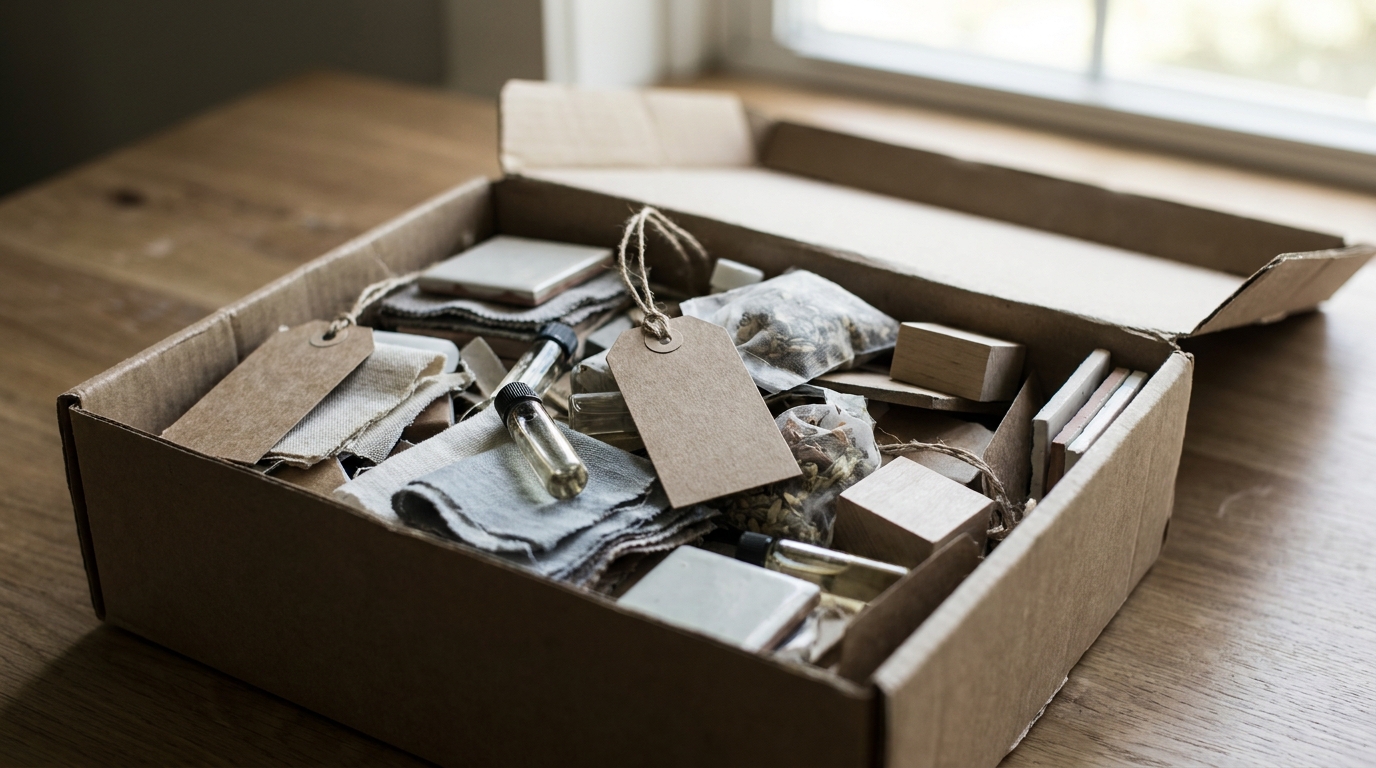
Samples are the cheapest mistakes you will ever make in China, which is exactly why you should make plenty of them. In Yiwu product sourcing, the sample stage is where a promising photo either becomes a product you trust or quietly saves you from a container of regret. This post covers the whole sample discipline as it actually works in Yiwu: getting samples at the booth, paying for them or not, labelling them so they stay useful, checking them properly, shipping them home, and keeping the reference sample that settles arguments later. It stays on this one step. The surrounding process, from shortlisting booths to writing the order, lives in our other guides.
Why booth samples matter more in Yiwu than elsewhere
Yiwu is a stock market as much as a production market. A great deal of what you will order is sitting behind the booth in sealed cartons right now, which means the sample in your hand is often not a promise of what will be made. It is a piece of what already exists. That makes Yiwu samples unusually trustworthy in one way, and it creates one specific trap: when your order is produced fresh rather than pulled from the stock the sample came from, the connection between sample and shipment loosens. Why a sample and a shipment can differ is a big enough subject that it has its own post in our quality series. Here, just carry the question with you: “is my order coming from this stock, or from a new run?” The answer changes how much the sample proves.
Getting samples at the booth
The mechanics are simple. You point, you ask, and one of three things happens. Cheap items are often handed over free, especially if you look like a serious buyer with a clear list. Mid-value items are sold to you at the booth price or slightly above it, and some booths will agree to credit that cost against a confirmed order, which is worth asking for while you are standing there. Higher-value or boxed items are nearly always paid.
Pay without fuss. A few yuan for certainty is the best money in this whole trade. The buyers who try to charm every sample free spend their goodwill on the wrong thing.
Take the business card at the same time, every time. In Yiwu the booth number on that card is the address of the relationship. A perfect sample with no card attached is an orphan, and the market is very large.
Label everything immediately, and we mean immediately
This is the rule that separates buyers who get value from samples and buyers who end a market day with a bag of anonymous objects. Before you walk away from the booth, the sample gets a sticker or a tag with: the booth number, the date, the quoted price and quantity tier, the packing, and any variant details like colour or size codes. Photograph the sample next to the business card as a backup, because stickers fall off and phones do not.
Two booths, three aisles apart, can sell almost identical LED strips at different prices with different connectors. On the day you can tell them apart. Two weeks later, in your office, you cannot, and the label is the only thing standing between you and reordering from the wrong supplier. We keep a sample log for clients as a plain spreadsheet, one row per sample, and it is boring and it works.
Checking a sample properly
Most people check samples with their eyes for four seconds. Use your hands, and use time. What a proper check looks like depends on the product, but the pattern holds:
- Use it the way a customer will. Zip the zip fifty times, not twice. Fill the bottle with hot water. Drop the phone case from table height onto the actual floor. Plug the item in and leave it on for an evening.
- Measure and weigh it. Numbers on a label are claims. A kitchen scale and a tape measure turn them into facts, and the weight of a sample is one of the best early warnings you have if the bulk goods later arrive lighter.
- Look at the inside. Seams, solder, the underside, inside the battery compartment. The outside of a product is where effort goes first. The inside tells you the habits of whoever made it.
- Check the packaging as a product. If the item sells in a colour box, the box is part of what your customer buys. Crush corners, check the print, and note the barcode situation. Also check what the packaging claims. Wording and marking requirements for your market are your responsibility to confirm at home, and it is much cheaper to notice a problem on a sample than on ten thousand printed boxes.
- Compare rivals side by side. If you took the same item from three booths, line them up and be honest about which one you would buy at retail. The cheapest of the three has to earn its place, not win by default.
Write down what you find while it is in front of you. “Booth 2F-1234 torch: brighter, heavier, switch feels cheap” is a note that makes decisions later. A memory does not.
Getting samples home, or not
If you are in Yiwu in person, samples travel in your luggage, and a surprising volume fits once the retail packaging comes off. Keep the packaging of anything where the box itself matters, and photograph the rest before you strip it.
Buying remotely, samples move by courier, and here the arithmetic needs saying out loud: international express is priced by weight and volume, and the freight on a sample round can cost several times the samples themselves. That is normal and it is still worth it, but plan it. Batch samples into one consolidated shipment rather than dribbling them out one courier bag at a time. This is a service we run from our warehouse in Yiwu, collecting samples from multiple booths over a week or two, photographing and logging each one, and sending a single box. Whoever does it for you, insist on the log. A box of unlabelled samples arriving abroad has thrown away half the value of the exercise.
Some clients also ask us to check samples on the ground and send photos, weights and short videos instead of the object itself, and decide from that. It works well for simple items. For anything where feel matters, textiles especially, get the physical thing in your hands before ordering. A camera cannot tell you a fabric feels cheap.
The reference sample: the one you do not give away
When a sample passes and you decide to order, that exact physical sample changes jobs. It stops being a shopping aid and becomes the reference standard for the order. Mark it as such, seal it in a bag, and keep it, ideally with the supplier holding a matching sealed one. If a dispute ever arises about whether the delivered goods match what was agreed, the sealed sample is the most persuasive object in the room, far more persuasive than anyone’s memory of a conversation at a booth in March.
The reference sample should also be written into the order itself, by a line as simple as “goods to match confirmed sample of [date]”. What else belongs in that written order sheet is the subject of the next post in this series, and it deserves its own space.
Treat samples as a stage with its own budget, its own log and its own week on the calendar, rather than a formality to rush past on the way to ordering. Of everything in Yiwu product sourcing, it is the stage with the best ratio of cost to protection, and the discipline is nothing more exotic than labels, notes, honest testing and one sealed bag on a shelf.